





What are the raw materials of tanning products?
Release time:
Jul 28,2025
Share:


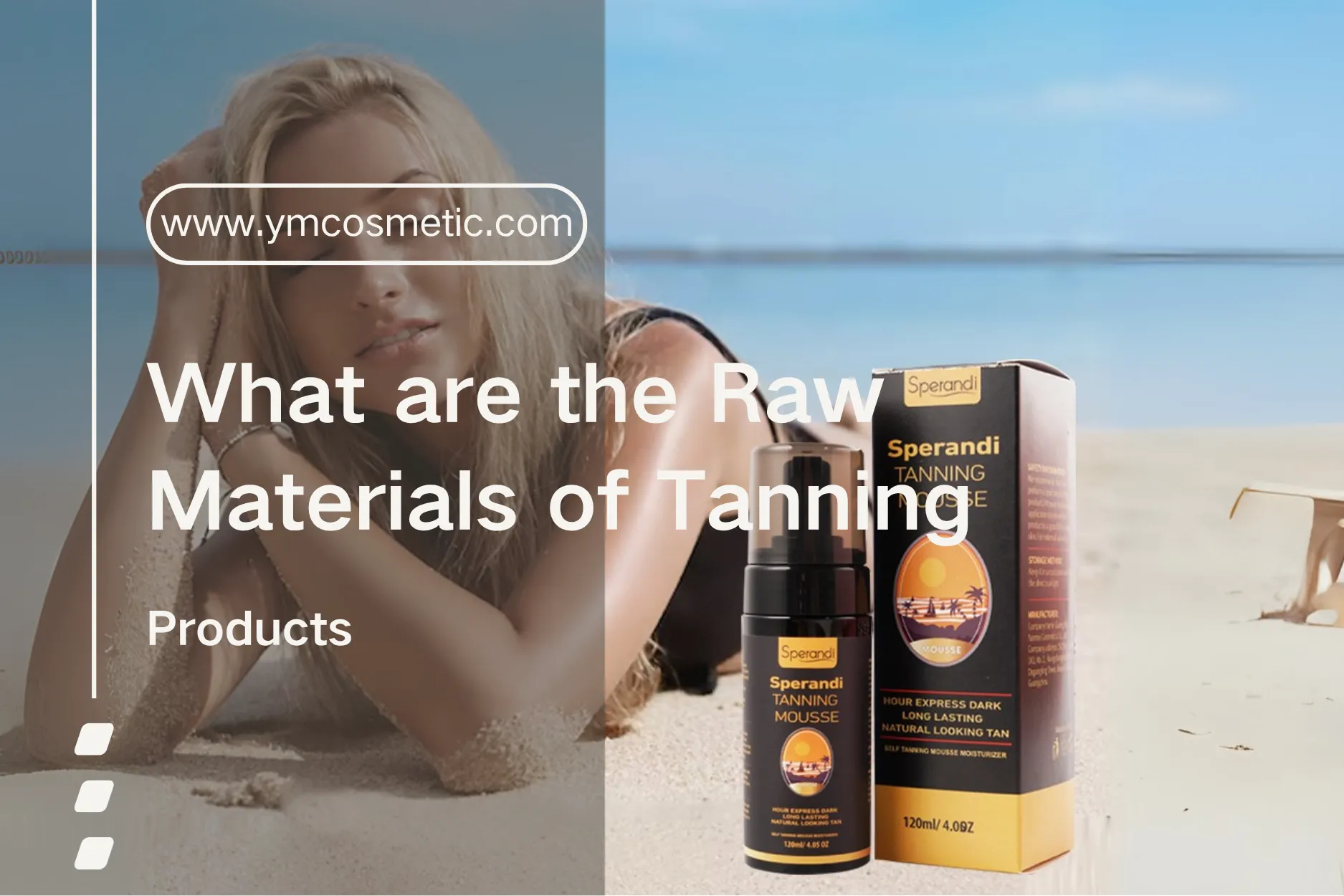
Tanning Raw Materials in Cosmetics are Mainly Divided Into Two Categories
1. Instant tanning/self-tanning cosmetics (Self-Tanners)
These products are applied to the skin and produce a tan effect similar to tanning by chemically reacting with dead skin cells on the surface of the skin. They do not require sunlight exposure and are a relatively safe way to physically change the skin color. The core raw material is:
Dihydroxyacetone
The most important raw material! More than 99% of modern tanning products use this as the main active ingredient. DHA is a colorless 3-carbon sugar molecule. It penetrates the outermost layer of the skin's stratum corneum (mainly dead skin cells) and reacts with the amino acids therein (mainly arginine, lysine, and glycine in keratin) in a non-enzymatic browning reaction called the Maillard reaction. This process produces brown polymers called melanoidins, which give the skin a brown or bronze color similar to that after sun exposure.

Effect characteristics:
1. The color usually begins to appear 2-6 hours after application, and the best effect is achieved in 24-72 hours.
2. The color will last for 5-7 days and gradually fade with the natural metabolism of the skin (dead skin shedding).
3. The depth of the color is related to the concentration of DHA in the product (usually between 3%-15%) and the amount and uniformity of application. The higher the concentration, the darker the color.
4. DHA is only effective on dead skin cells that it comes into contact with, and cannot permanently change skin cells or stimulate melanin production. Therefore, it needs to be reapplied regularly.
5. DHA will temporarily turn the skin yellow (especially in the early stages of the reaction) and eventually turn it brown.
6. The FDA has approved DHA for topical cosmetics.
Important: DHA is a dye that may stain clothing, sheets, and light-colored leather. Be careful when using it and make sure the product is dry before putting on clothes. It may also deposit more in areas with thicker or drier skin (such as knees, ankles, elbows), resulting in too dark or uneven color.
Auxiliary Tanning Ingredients
Reddish-brown Dye
A sugar molecule with a similar structure to DHA and a similar working principle. The effect is not as significant as DHA when used alone, and it is usually used in combination with DHA.
Advantages: The color tone produced may be more natural (reddish brown), it is not easy to over-deposit in dry areas, it can improve the color tone of DHA alone (yellowish/orange), and the smell may be milder. The action time is usually slower than DHA (it may take 1-3 days to achieve the best effect). It can prolong the duration of the tanning effect (when used with DHA).

Caramel Color
Provides an instant tinting effect, which can temporarily cover up the yellow tint produced by DHA in the early stage before the Maillard reaction is completed, making the skin look more natural.

Other Temporary Colorants
Such as low-concentration synthetic pigments, plant extract pigments, etc., provide short-term covering or toning effects, so that you can see whether the application is even when applying, and provide visual improvement during the formation of the tanning effect, and will eventually be washed off.

Sun-boosting Or Tanning Cosmetics
The purpose of this type of product is to accelerate the body's own process of producing melanin under sunlight/ultraviolet rays (tanning). They do not directly change the skin color themselves, but try to improve the skin's ability to respond to UV. The effects are generally considered weak or controversial, and there are concerns about safety. They are now rarely used or not recommended.
Tyrosine Derivatives
Such as L-tyrosine, tyrosine esters (acetate or propionate, etc.). The precursor of melanin is tyrosine. In theory, providing additional tyrosine as a substrate may promote the synthesis of melanin. However, skin cells themselves contain a lot of tyrosine, and it is difficult for external supplements to penetrate and really affect melanin synthesis. Scientific evidence does not support its effectiveness. The use of such products may cause users to be exposed to the sun for a long time without achieving the expected tanning effect, but instead increase the risk of sunburn.
PSORALENs
Psoralen compounds extracted from plants.
Effect: They can enhance the skin's sensitivity to UVA (photosensitization). Used in medical treatment for photochemotherapy of psoriasis and vitiligo (PUVA therapy).
Risks and prohibitions: It is extremely dangerous to use it for tanning! It will greatly increase the risk of sunburn, skin cancer and severe allergic reactions. Almost all modern cosmetic regulations strictly prohibit the use of such substances in ordinary tanning products. Please absolutely avoid using over-the-counter tanning products that contain these ingredients.

Basic Information of DHA
Chemical name: Dihydroxyacetone
Other names: DHA, Dihydroxyacetone, Glycerone
CAS number: 96-26-4
EINECS number: 202-494-5
Molecular formula: C₃H₆O₃
Molecular weight: 90.08 g/mol
Appearance: Usually white to off-white crystalline powder, odorless or slightly sweet (but a unique smell will be produced during skin reaction).
Solubility: Very soluble in water, soluble in ethanol, slightly soluble in organic solvents such as ether and chloroform.
Stability: DHA is relatively unstable in aqueous solution, especially easy to degrade (polymerization, discoloration) at high temperature, light or specific pH value. Therefore, stabilizers (such as ascorbic acid/vitamin C, chelating agents such as EDTA) are often added to the formula and adjusted to the appropriate pH range (usually acidic, such as pH 3-5).

The core role of DHA in tanning products
Mechanism of action: DHA reacts with free amino acids (especially lysine, arginine, glycine) rich in the outermost layer of the skin (stratum corneum) and amino acid residues in keratin through non-enzymatic browning reaction (i.e. Maillard reaction or similar reaction). This reaction produces a series of brown polymers containing nitrogen, collectively known as melanoidins.
Reaction characteristics: Acts only on the stratum corneum: Acts on the dead skin cells (keratin) in the outermost layer of the epidermis, does not penetrate the living epidermis, and does not stimulate melanocytes to produce melanin.
Non-permanent dyeing: With the natural metabolism of the skin (about 5-7 days), the pigmented dead skin cells fall off and the color gradually fades.
Color change process: After application, the skin may initially remain unchanged or slightly yellow (within a few minutes), and will begin to turn yellow to orange after about 2-6 hours, and gradually turn into a stable brown/bronze/wheat color (melanotin is fully formed) within 24-72 hours.
Final hue: Depends on individual skin's amino acid composition, thickness, pH, treatment, and other ingredients in the formula. Usually not as "glowing" as a natural tan, but modern formulas improve the effect by compounding reddish-brown dyes (such as Erythrulose) and toners.

Key factors affecting the effect:
DHA concentration: This is the most important factor in determining the depth of color. DHA concentration in cosmetics is usually between 3% and 15%.
≤ 5%: Natural light tan or complexion enhancement.
6% - 8%: Medium bronze.
9% - 12%: Darker bronze or brown.
13% - 15%: Darker tan or brown-black (recommended for experienced users).
Advantages:
Safe alternative to sunbathing: A tanned look can be achieved without exposure to harmful UV rays, avoiding the risk of skin sunburn, photoaging, and skin cancer caused by UV rays.
Highly controllable: The depth of color can be adjusted by concentration and frequency of application.
External use and non-permanent: The effect is limited to the stratum corneum and will eventually fall off with skin metabolism.
Wide applicability: It can be used in areas that are difficult to tan naturally.

Disadvantages and Precautions of Tanning Mousse
Unique smell: During the reaction between DHA and the skin, a smell similar to "fermentation", "bread" and "plastic" (a byproduct of melanin formation) will be produced, which usually weakens after the reaction is completed (after 1 day). Modern formulas will add fragrances to cover it, but they cannot completely eliminate it.
Risk of uneven dyeing: It is easy to deposit too much on dry, rough, wrinkled areas of the skin (knees, elbows, ankles mentioned above) or joints, resulting in too dark color or even "zebra stripes". Prevention method: Exfoliate thoroughly (but not excessively) and moisturize well before application; use less or avoid dry areas when applying the product; use body oil or lotion to cover these areas thinly before applying tanning products.
Temporary yellowing: The skin often presents an unnatural yellow-orange tone in the early stage of the reaction (within a few hours).
No sunscreen effect: The color produced by DHA does not provide any UV protection (SPF)! Users still need to strictly use sunscreen products to protect their skin from sun damage.
May stain clothes and sheets: DHA itself is a dye. After application, be sure to make sure the product is completely dry (usually takes more than 15-30 minutes) before wearing clothes or contacting bedding, otherwise it may leave yellow or orange stains (especially light-colored, cotton, linen, and silk materials). It is better to wear dark, loose old clothes to sleep.
Safety and regulations of tanning products
FDA approval: The U.S. Food and Drug Administration (FDA) has approved DHA as a topical cosmetic ingredient for temporary changes in skin color (tanning purposes) since 1977.
International recognition: The European Union Consumer Safety Scientific Committee (SCCS) and other international authoritative organizations have assessed that, based on the available scientific data, DHA concentrations of no more than 15% in cosmetics are safe for use on the skin.
No carcinogenic risk association: There is currently no evidence that topical DHA is carcinogenic.
Inhalation risk (spray products): Be careful! FDA has a special reminder for spray/atomized tanning products. Although it is safe to apply externally, the safety of large amounts of frequent inhalation of DHA mist (such as when doing fully enclosed spray tanning in a tanning salon) has not been fully studied. When consumers use spray products on their own, they should avoid spraying around the mouth, nose, and eyes, and try to hold their breath or use them in a well-ventilated area. It is recommended to choose tanning mousse.

Main Application Forms (product types)
Tanning lotion/body lotion
Tanning gel
Tanning spray
Tanning mousse/foam
Tanning wipes
Tanning facial products (usually lower concentration than body products)
Tanning gradient products (for contour modification)
Ready to Create Your Unique Cosmetic Line











OEM/ODM PRODUCT
Contact Us
Company Phone/Fox:+86-20-87710380
Office ADD: 3rd Floor, Building 1, Kemulang Park, Tianhe Software Park,Guangzhou, China
Factory #1ADD: Building B (Room101-501),Shuikou Village,Tianhe District, Guangzhou,China
Factory #2ADD: Room 401, Building 1, Kangze 5th Road, Baiyun District, Guangzhou, China
Get in Touch – We’re Here to Help !
Copyright © 2025 GUANGZHOU YUNMEI COSMETICS Co., Ltd All Rights Reserved.