





How to Use a Foot Mask Best?
Release time:
Aug 07,2025
Share:



Rough, cracked heels are often caused by wearing shoes that don't fully cover the heels, not moisturizing properly, and the accumulation of dead skin cells. Therefore, regular care is crucial. However, when using tools like foot scrapers or foot scrapers to exfoliate the soles of the feet, excessive force can often lead to cuts. Therefore, foot masks that use ingredients like fruit acids to help with dead skin cell metabolism are a good solution.
However, there are also many cases of skin allergies and other problems caused by foot masks. How long should foot masks be applied? What is the correct way to use them?
1.What are The Benefits and Uses of Foot Masks?
Foot masks use acids to remove dead skin cells and promote peeling. This gentle dissolution of dead skin cells creates an immediate resurfacing effect, leaving the skin on the soles of the feet feeling softer and smoother immediately after use. Some foot masks feature a gentle lactic acid formula combined with plant extracts or nourishing ingredients. Not only does it easily remove dead skin cells and calluses, but the nourishing ingredients also soothe and moisturize the skin.
Main Ingredients of Foot Masks
Main Ingredient 1: Lactic Acid
Lactic Acid: Hydrates and nourishes the skin, promoting skin renewal.
Compared to glycolic and salicylic acids, lactic acid, due to its larger molecules, only provides a superficial exfoliation. While not suitable for removing deep, hardened skin, it is relatively mild to the skin, making it ideal for first-time foot mask users or those experiencing mild roughness on their feet.
Main Ingredient 2: Alpha Hydroxy Acid
AHA: Hydrates and nourishes the skin, promoting skin renewal.
Glycolic acid is a type of alpha hydroxy acid, most of which are derived from fruit. Its small molecules allow for strong penetration, making it ideal for removing dead skin cells. Glycolic acid also effectively stimulates skin turnover, keeping it smooth and supple.
However, it's important to note that while glycolic acid is highly effective, it can also be irritating to the skin due to its high penetration rate. This can lead to sensitive symptoms such as redness or itching. If you have sensitive skin, it's recommended to perform a skin test before use or avoid foot peel masks containing these ingredients.
Main Ingredient 3 of Foot Masks: Salicylic Acid
Salicylic Acid: A keratin softener. Avoid long-term use and not recommended for children. Salicylic acid also helps with keratin turnover, primarily by gradually softening and exfoliating thick skin and keratin. Salicylic acid is often used in exfoliating skincare products, and its benefits are relatively well-known, but its relatively irritating side effects can be a major drawback. However, with technological advancements, many products containing salicylic acid have been improved, significantly reducing the risk of skin sensitivity and redness. However, using salicylic acid to exfoliate can cause skin to become more dry, so it's recommended to moisturize thoroughly afterward.

2.The Right Time To Apply a Foot Peel Mask
Generally, a foot mask should be used for 90 to 120 minutes (please refer to the time indicated on the packaging). Rinse with clean water after use. Use no more than once a week.
From three to five days after use, the cuticle on your feet will begin to slough, which will last for about two weeks. If thick skin remains after a week, you can use an exfoliating foot mask again. You can use a moisturizing foot mask daily to keep your feet smooth and supple.
Each brand's foot mask has a specific use time based on its formula. You can use it according to the recommended use time on the packaging. You can also adjust the time based on your skin type. For those prone to allergies, shorten the use time and be mindful of it to avoid damage.
Salicylic acid removes dead skin cells and stimulates metabolism, helping to remove excess cuticles. However, improper use can also cause skin damage. When using foot peeling masks, people often seal the entire foot with plastic wrap or a special cover to enhance absorption, which can increase the risk of damage. Therefore, foot masks should not be applied for extended periods.
Also, foot peeling masks should be applied once a week for no more than 10 minutes each time. If peeling occurs, such as with blisters from burns, avoid contact with water to prevent bacterial infection and cellulitis.

3.How To Use a Foot Mask Foot Peel
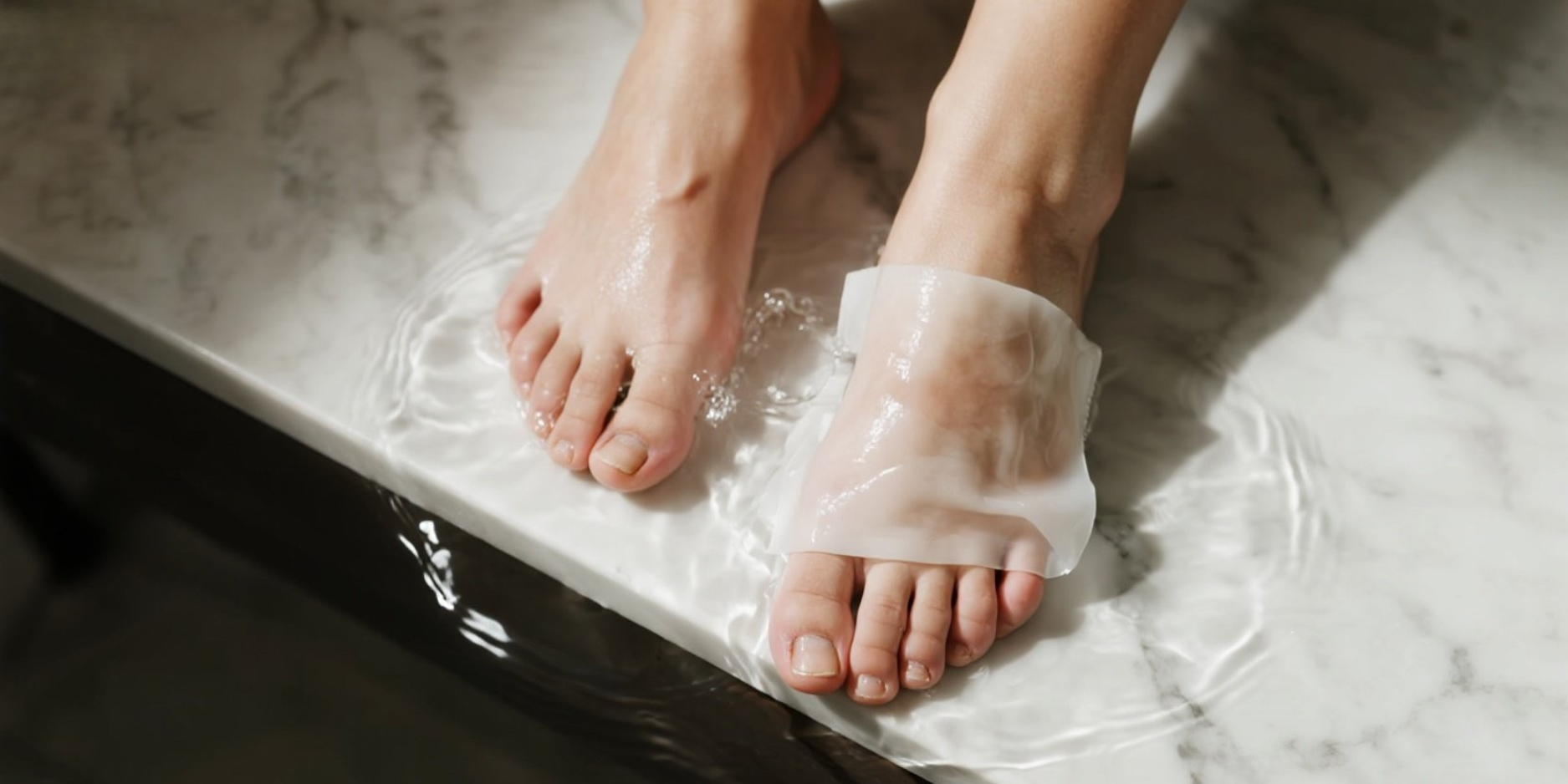
Before use, soak your feet to soften the cuticle. Apply the foot mask peel for about 1-2 hours. It's best to wear socks over the mask to ensure a firm adherence. After one use, allow about 7 days for the skin to peel.
Notes:
1. Each application should last 1-2 hours.
2. The cuticle on your feet will begin to peel on the 3rd to 4th day after use, continuing for about two weeks.
3. If peeling persists after one week, use a second mask. After two uses, the skin should be almost completely peeled. The second mask can be used for 30 minutes.
4. You can also use the foot mask peel on weekdays to keep your feet smooth and delicate.
5. Store the foot mask foot peel below 30 degrees Celsius, out of direct sunlight, and out of reach of children. Use immediately after opening to prevent contamination and
deterioration through contact with air.
6. If any sensitivity or discomfort occurs while using the foot mask, discontinue use immediately, rinse with clean water, and consult a doctor.

4.Moisturizing Foot Mask Side Effects and Treatment
Special Reminder: If you experience any unusual symptoms such as redness, swelling, pain, or heat after using the foot moisturizing mask, discontinue use immediately. Rinse thoroughly with clean water and apply ice to the affected area for 20 minutes to relieve swelling, pain, burning, and other discomfort.
If redness, swelling, itching, or other discomfort persists, seek medical attention immediately.
Foot Masks for Rough Skin
Salicylic acid foot masks on the market are essentially corrosive acids. For example, even a small amount of strong acid will quickly burn the skin. When the strong acid is fully diluted, the amount of acid is minimal and will not penetrate the skin, remaining on the surface. Foot masks work by corrosive means. They don't recognize problematic areas on the feet, such as dead skin or calluses. They simply peel off a layer of skin wherever they come into contact, damaging intact skin cells. The most significant harm is damage to skin cells and pores, severely hindering foot detoxification. The skin on the feet can become rough and dry, which are all side effects.
Therefore, it's important to exercise caution when choosing a foot mask. Alternatively, you can use other methods, such as applying lotion or soaking your feet, to maintain the delicate beauty of your foot skin and reduce the use of foot masks.

Foot Masks for Dry Feet
Cracked heels are more common in the elderly and women. Frequent physical and chemical irritation, coupled with the cold winter weather, reduces subcutaneous sweat gland secretion, dries the skin, and thickens the keratin, losing its elasticity. Hardened, peeling, and cracked heels are common. Therefore, it's important to take extra care of your feet. However, if your heels are already cracked and peeling, using a foot mask is not recommended to prevent secondary damage or infection. Recommended Treatments for Dryness
Applying Vitamin E
Vitamin E has antioxidant properties, strengthening the capillaries in your skin and improving blood circulation. Soak your feet in water boiled in orange peels for 10-15 minutes every night. After drying, puncture two vitamin E capsules and apply them to dry, flaking areas. Then, apply a thick layer of Vaseline and cover with plastic wrap. After a week, your soles will become smooth, white, and tender.
Vinegar Foot Soak
Foot odor, flaking heels, and itching are all caused by fungi. Soaking your feet in vinegar can sterilize, relieve itching, and eliminate odor.
Instructions: Prepare a bottle of vinegar, boil it for 5 minutes, then pour it into a basin of water. Once cooled to a temperature your feet can tolerate, soak your feet in the vinegar for about 10 minutes. Do this 2-3 times daily for a week. After two weeks, you'll notice that old cuticles are gradually sloughing away, and your foot odor is gone. If you experience dryness or discomfort in your feet after using a foot mask, you can also try the above method! Who should not use foot masks?

Children Should Not Use Foot Masks
Foot masks primarily exfoliate dead skin cells and are not suitable for children's delicate skin.
Pregnant or breastfeeding women should not use foot masks.
Products containing salicylic acid can be irritating to pregnant or breastfeeding women and are not recommended for widespread use.
Foot masks should not be used by people with athlete's foot.
Many people with athlete's foot hope to use the peeling properties of foot masks to achieve soft, supple feet. But wouldn't using foot masks on someone with athlete's foot be too irritating? Furthermore, people with athlete's foot often have numerous wounds on their feet. Because salicylic acid and other irritants are the primary ingredients, contact with wounds can be painful and not only will it not help, but may even worsen the condition. It is recommended that those with athlete's foot first seek treatment from a dermatologist before considering other supplemental products based on their doctor's advice.
5.People With Inflammatory Conditions or Sensitive Skin Should Not Use Foot Mmasks
Foot masks can cause extensive peeling of the skin, sometimes accompanied by stinging, redness, swelling, itching, or blisters. If you already have irritated or sensitive skin, it's recommended to discontinue use.
Furthermore, the thick skin on your feet is unevenly distributed. Excessively using the same concentration of salicylic acid all at once can cause allergies in thinner areas, such as between the toes and on the tops of the feet, leading to damage. Frequent use can cause your feet to peel from external irritation, potentially leading to skin inflammation. More serious wound infections can lead to cellulitis.
An allergy test is recommended for those with sensitive skin
Foot masks contain enzymes and salicylic acid. Excessive concentrations can irritate the skin, potentially causing redness, swelling, pain, and even ulcers. It's recommended to use them no more than twice a month for 15-20 minutes each time. Patients with chronic diseases or diabetes, who have poor sensory nerve function, should exercise caution.

Appropriate use of hydrating foot masks can enhance your beautiful feet.
In fact, to maintain delicate foot skin, you don't necessarily need to use chemical-containing topical products like foot masks; they aren't always optimal for foot health. A simple way to maintain your skin is to soak your feet in warm water for 10 minutes, gently scrape off any old skin, and then apply lotion. Cover your feet with plastic wrap or wear cotton socks overnight. This will provide a nourishing effect without damaging your skin.
If you have chronic thick skin and calluses on the soles, forefoot, or heels, it could be due to a mechanical problem in the lower limbs, resulting in uneven force distribution and excessive pressure, leading to excessive growth of the stratum corneum. Ideally, see a doctor for a thorough examination and treatment to address the cause of the thick skin and calluses. After all, the root cause must be addressed. Smooth foot skin is possible without foot masks!
Ready to Create Your Unique Cosmetic Line











OEM/ODM PRODUCT
Contact Us
Company Phone/Fox:+86-20-87710380
Office ADD: 3rd Floor, Building 1, Kemulang Park, Tianhe Software Park,Guangzhou, China
Factory #1ADD: Building B (Room101-501),Shuikou Village,Tianhe District, Guangzhou,China
Factory #2ADD: Room 401, Building 1, Kangze 5th Road, Baiyun District, Guangzhou, China
Get in Touch – We’re Here to Help !
Copyright © 2025 GUANGZHOU YUNMEI COSMETICS Co., Ltd All Rights Reserved.