





How to Choose a Sunscreen to Protect Your Skin from the Sun
Release time:
Jun 13,2025
Share:


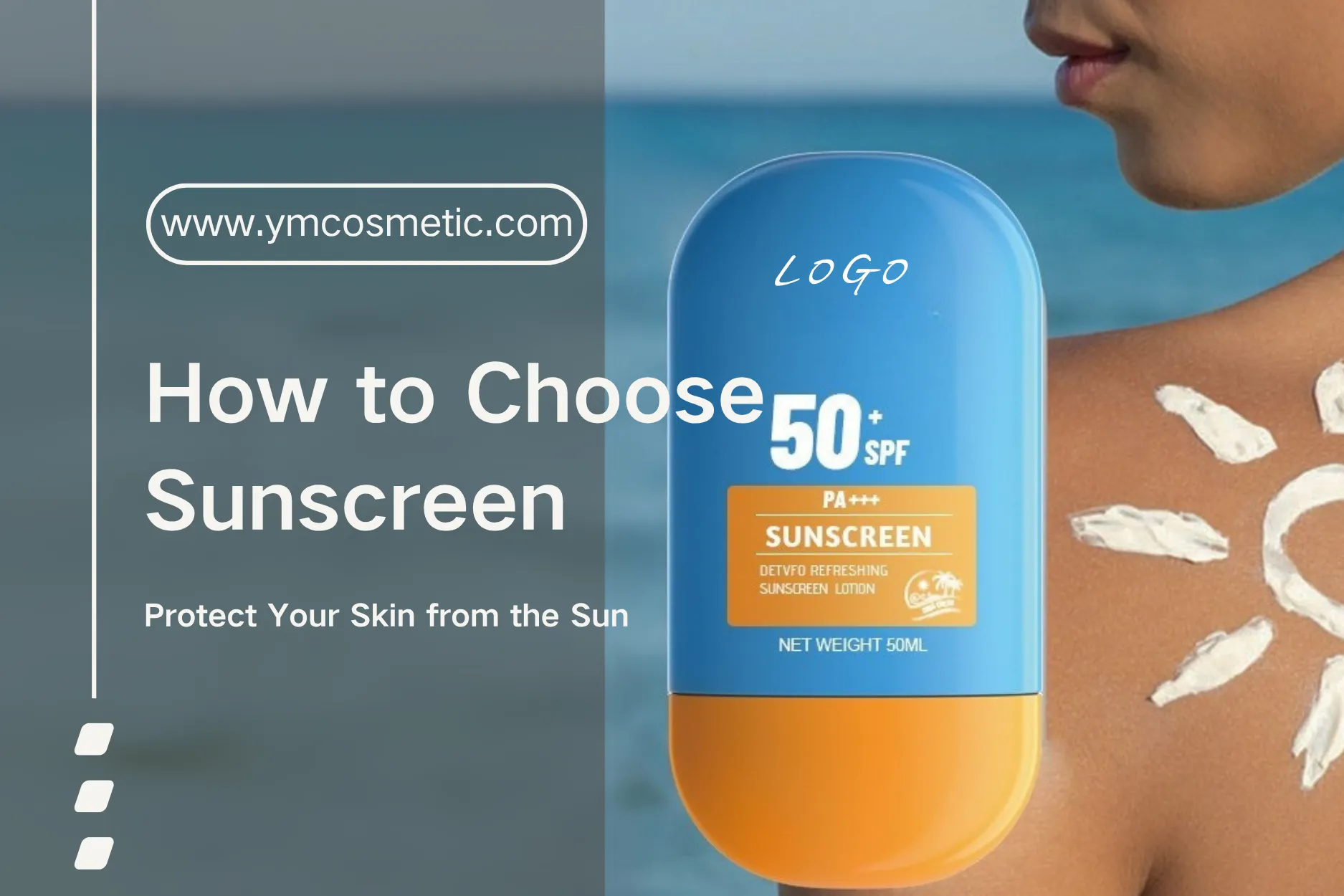
Faced with a wide range of sunscreen products, from SPF30 to SPF100, from sprays to sunscreen sticks, from "anti-blue light" to "anti-pollution", are you dazzled?
Dermatologists warn: "Choosing the wrong sunscreen will not only waste money, but may also cause allergies and acne! Yunmei will talk about various rigid knowledge, but all of them revolve around how we can understand the various indicators on the sunscreen bottle, understand the meaning behind them, and scientifically choose daily necessities.
SPF Value of Sunscreen
Experimental data show
SPF 15 sunscreen can block about 93% of UVB.
SPF 30 sunscreen can block about 97% of UVB.
SPF 50 sunscreen can block about 98% of UVB.
SPF 50+ sunscreen can block more than 98% of UVB rays, providing the highest level of protection.
UV Index
When checking the weather forecast, you can see a UV index. As shown in the figure, the UV index is 5. We say that when the index is ≥3, we need to take sun protection measures, such as wearing a hat, wearing sun-protective clothing, or spraying sunscreen, sunscreen spray, etc.
Most people know that sun protection is mainly to prevent ultraviolet rays in the sun from causing skin damage. Ultraviolet rays are divided into UVA, UVB, and UVC according to the range of wavelengths, but the shortest wavelength UVC is almost completely blocked by the atmosphere. Therefore, the design of sunscreen products is mainly for UVA and UVB.

UV Value and Category | Effects |
1-2 | A UV Index reading of 2 or less means low danger from the sun's UV rays for the average person:
|
3-5 | A UV Index reading of 3 to 5 means moderate risk of harm from unprotected sun exposure.
|
6-7 | A UV Index reading of 6 to 7 means high risk of harm from unprotected sun exposure. Protection against sun damage is needed.
|
8-10 | A UV Index reading of 8 to 10 means very high risk of harm from unprotected sun exposure. Protection against sun damage is needed.
|
11+ | A UV Index reading of 11 or higher means extreme risk of harm from unprotected sun exposure. Try to avoid sun exposure during midday hours, from 10 a.m. to 4 p.m. Apply sunscreen with an SPF of at least 30 liberally every 2 hours.
|
What are UVA and UVB?
UV is the abbreviation of Ultraviolet, and UVA and UVB represent two different wavelengths of ultraviolet rays.
UVA: causes suntan or aging.
UVB: causes sunburn or sunburn.
UVA has a longer wavelength and shorter energy, but its penetration is stronger than UVB. Therefore, most sunscreen products have better protection against UVB, but it is technically difficult to provide good protection against UVA.
UVA is divided into long-wave UVA and short-wave UVA according to wavelength. Long-wave UVA has a longer wavelength and can damage the dermis, but has lower energy, so it can cause suntan and aging. Short-wave UVA has a shorter wavelength and can reach deeper into the epidermis.

How to choose a sunscreen with a sun protection value
Maybe you think you should choose a sunscreen with UVA and UVB on the bottle, but the sunscreens on the market do not have the words UVA and UVB printed on the bottle, only sunscreen SPF20+, sunscreen SPF30+, sunscreen SPF50+, PA++, PA+++, PA++++.
Because UVA, it is transformed into:
PFA (Protection Factor of UVA), UVA protection index;
PPD (Persistent Pigment Darkening), continuous tanning factor;
PA (Protection Grade of UV-A), UVA protection grade.
Chinese sunscreens are represented by PA, which refers to the ability to prolong the time of tanning, and PA is actually a value converted from PPD. Basically, the more + signs there are, the longer it can delay the time of tanning. (One + sign = 2-4 times longer suntan time)
European sunscreens will also have the following two signs

Because the grading method is relatively rough, the more detailed grading method for sunscreens is Boots Star
If the UVA protection is 20-40% of the UVB protection, it will get 1 star; and so on, if the UVA protection is 90-100% of the UVB protection, it will get 5 stars. The more stars, the better the uniformity of sun protection.
UVB turns into: SPF (Sun Protection Factor) sunscreen index for UVB
SPF50+: Let you get sunburned for 50 times longer. This means that if it takes 10 minutes to get sunburned in the sun without sunscreen, then the time to get sunburned with SPF50+ sunscreen is extended to 10*50=500 minutes.
Three Types of Sunscreen Principles
Physical sunscreen, representative ingredients: zinc oxide, titanium dioxide, suitable for people: sensitive skin, children, disadvantages: whitening, thick;
Chemical sunscreen, representative ingredients: avobenzone, octocrylene, suitable for people: oily skin, seeking skin feel, disadvantages: may irritate the skin;
Physical and chemical combination, representative ingredients: mixed two types of ingredients, suitable for people: most skin types, disadvantages: need to test tolerance.

Accurately Match Sunscreen According to Skin Type
1. Oily acne skin sunscreen: chemical sunscreen + oil control formula
Thunderproof ingredient: isopropyl palmitate (five stars for acne risk)
Life-saving ingredients: silica (absorbs oil), niacinamide (regulates skin =Fat)
Test case: Alcohol-containing shaker sunscreen, oil control effect increased by 40% (Cosmetic Science 2022)
2. Dry and sensitive skin sunscreen : physical sunscreen + moisturizing formula
Golden combination: zinc oxide + hyaluronic acid + squalane
Fatal minefield: benzophenone-3 (sensitization rate up to 17%)
Clinical data: Sunscreen products containing ceramide can reduce the probability of redness by 63% (Contact Dermatitis 2023)
3. Pregnant women/children sunscreen: pure physical sunscreen + no fragrance
Safety standard: Nano-grade zinc oxide is preferred (does not penetrate the skin barrier)
Prohibited ingredients: Ethylhexyl salicylate (may affect the fetus)

Three Golden Rules for Using Sunscreen
1. The amount determines the effect
The face needs the size of a 1 yuan coin (about 1g), and if you use 1/2 less, the protection value will plummet to SPF10
Calculation formula: actual SPF = marked SPF × (actual amount/standard amount)
2. When to reapply
Reapply every 2 hours (outdoor activities are shortened to 80 minutes)
Black technology: sunscreen with photostable technology, photodegradation rate is reduced by 70%
3. Cleaning instructions
Waterproof sunscreen: need to be cleaned with makeup remover.
Ordinary sunscreen: amino acid facial cleanser can be washed (microscope observation residue <5%)

How to choose sunscreen scientifically?
In general, when choosing sunscreen, you should follow the ABC principle
Avoid (avoid exposure to the sun), Block (physical shielding), Cream (sunscreen), among which sunscreen as the last line of
Defense Must Meet the Following Key Points
1. Look at the sun protection: daily use SPF30+/PA+++ or above, outdoor high-intensity ultraviolet rays need SPF50+/PA++++ and be waterproof.
2. Look at the skin type:
Oily skin/acne skin: shake texture or chemical sunscreen.
Dry skin: physical and chemical combination sunscreen containing moisturizing ingredients.
Sensitive skin: pure physical sunscreen (mainly zinc oxide/titanium dioxide).
3. Look at the ingredients: avoid benzophenone-3 and octyl (irritation around the eyes), and choose alcohol-free and fragrance-free formulas for children/pregnant women.
In a word: sunscreen must be "enough, frequent, and suitable", combined with hard sunscreen (hat/sunglasses) to protect the skin in all directions!

Ready to Create Your Unique Cosmetic Line











OEM/ODM PRODUCT
Contact Us
Company Phone/Fox:+86-20-87710380
Office ADD: 3rd Floor, Building 1, Kemulang Park, Tianhe Software Park,Guangzhou, China
Factory #1ADD: Building B (Room101-501),Shuikou Village,Tianhe District, Guangzhou,China
Factory #2ADD: Room 401, Building 1, Kangze 5th Road, Baiyun District, Guangzhou, China
Get in Touch – We’re Here to Help !
Copyright © 2025 GUANGZHOU YUNMEI COSMETICS Co., Ltd All Rights Reserved.